You have meticulously packed your running shoes, your moisture-wicking gear, and perhaps even a pair of lightweight compression socks. Yet, when you return home, the shoes are pristine—entirely unused.
For the modern professional, the travel workout is often a victim of its own ambition. We treat business trips as "maintenance-free" zones, or worse, as opportunities to squeeze in Herculean efforts that our jet-lagged bodies simply cannot sustain. The result is a quiet, incremental abandonment of the fitness program you spent months building. The failure isn’t a lack of willpower; it is a failure of design.
To maintain momentum while traveling, you must stop viewing the hotel room as an obstacle and start viewing it as a controlled environment. The goal isn’t to reach a new personal best while navigating a strange time zone; the goal is to land back at your home airport still firmly inside your program.
The Logistics of Failure: Why "Finding a Gym" Is a Fallacy
The most common point of failure for traveling fitness enthusiasts is the optimistic plan to "find a gym when I get there." This strategy relies on external variables that are rarely in your control.
Hotel fitness centers are notoriously unreliable. They often consist of a singular, malfunctioning treadmill, a bench occupied by a guest who has been there for forty minutes, and two mismatched dumbbells. Seeking out a local commercial gym requires navigating membership hurdles, paying day-pass fees, and factoring in travel time that your itinerary simply does not accommodate. By the time you’ve accounted for the logistical friction, the "window" for your workout has vanished, replaced by the crushing reality of an 8:00 AM client breakfast.
What you do have in every hotel, from Cleveland to Frankfurt, is a floor, a wall, a chair, a door, and your suitcase. These items are the building blocks of a sustainable, portable training protocol. When you strip away the need for fancy equipment, you remove the excuse for inactivity.
The Myth of the "Lost Week"
There is a pervasive anxiety that a four-night trip will undo months of physical progress. This fear triggers one of two counterproductive responses: either you attempt to cram a punishing, high-volume workout into a week where you are already sleep-deprived, or you abandon the entire week as a "write-off."
Research suggests that the physical impact of a short break is vastly overstated. In a study of twenty resistance-trained men who ceased training for two weeks, leg-press strength remained stable. While this is not a universal law of physiology, it serves as a necessary reminder that your body is not a machine that resets the moment you step off a plane.
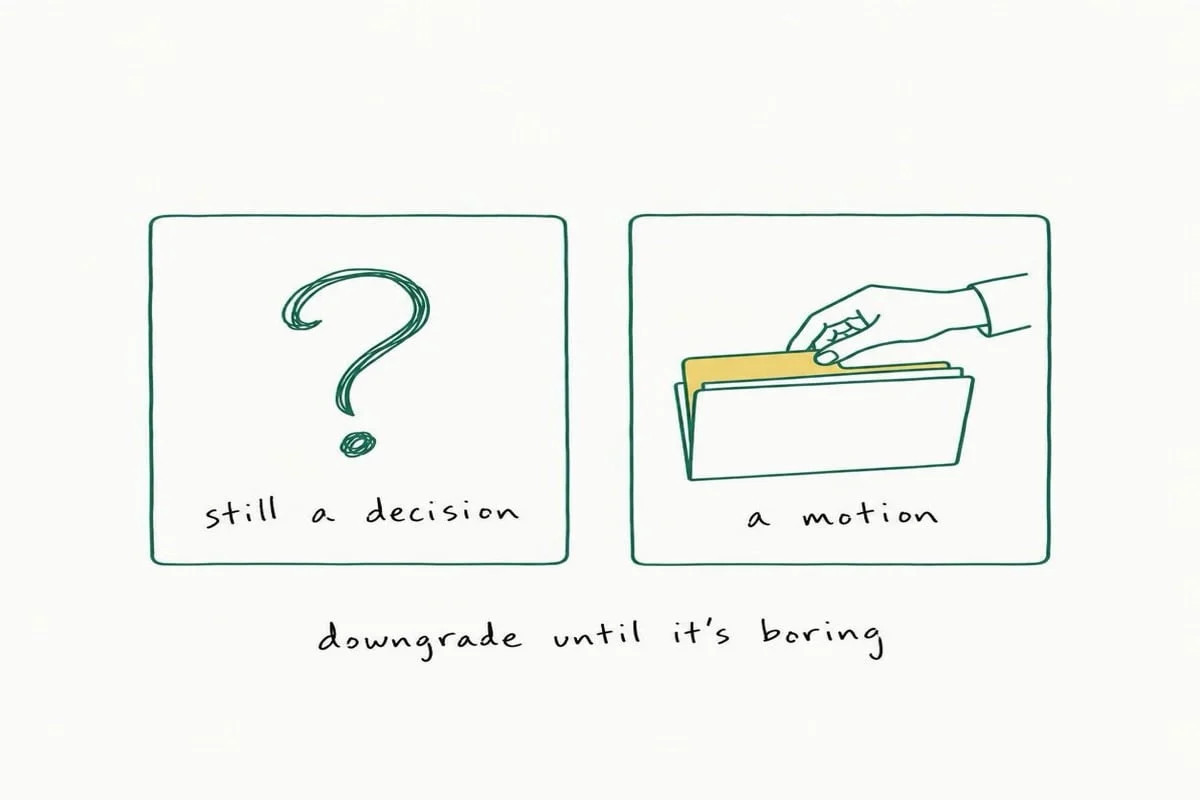
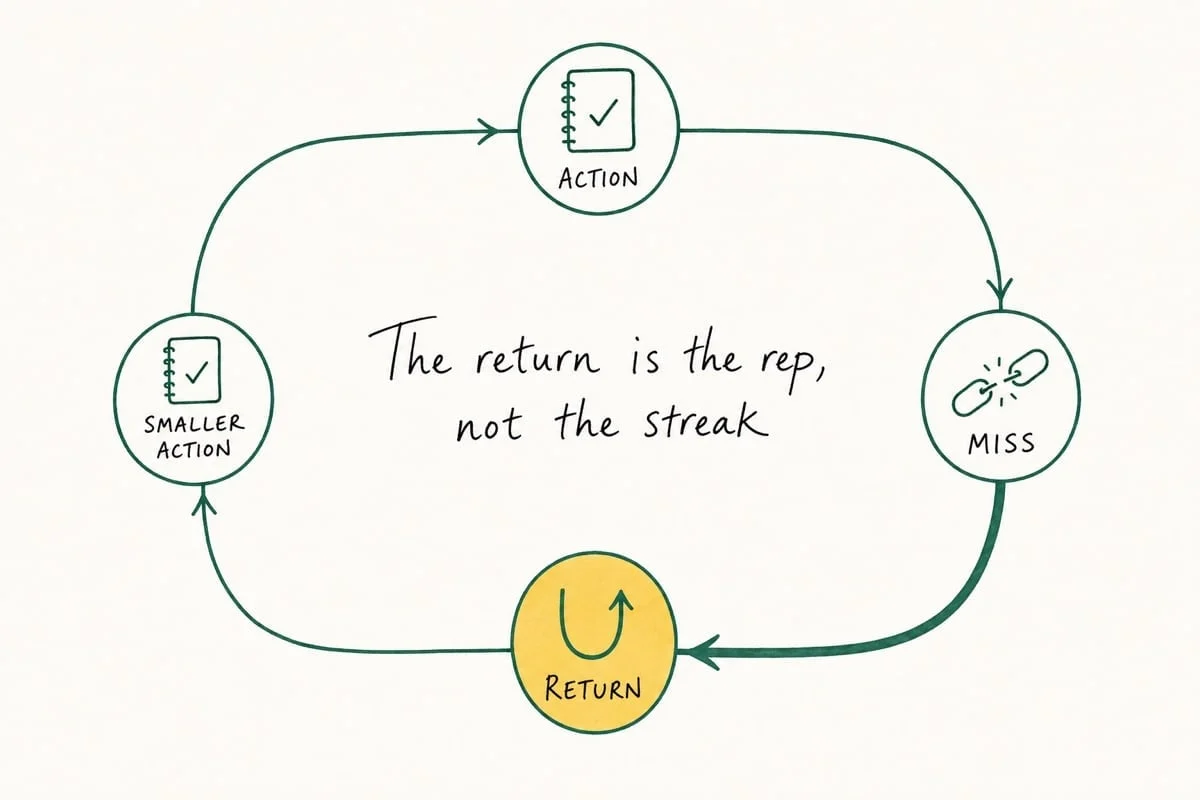
The real threat to your fitness isn’t the four days of inactivity; it is the "restart" phenomenon. When you return home with no plan and a vague sense of being "behind," you tell yourself that you will resume your training "properly on Monday." That Monday, however, becomes a psychological barrier. The skip you made on Wednesday in a hotel room cost you almost nothing; the week-long hesitation that follows costs you your momentum.
The Two-Session Protocol
To circumvent the decision-fatigue of travel, you must arrive with two pre-written sessions. The rule is simple: Session A is your 20-minute "full" workout, and Session B is an 8-minute "floor" version.
| Movement | Hotel-Room Execution | Full Session (20m) | Floor Session (8m) |
|---|---|---|---|
| Split Squat | Back foot on floor, hand on desk chair | 3 sets of 8-10/leg | 1 set of 8/leg |
| Hip Hinge | Single-leg deadlift (bodyweight) | 3 sets of 8/leg | 1 set of 8/leg |
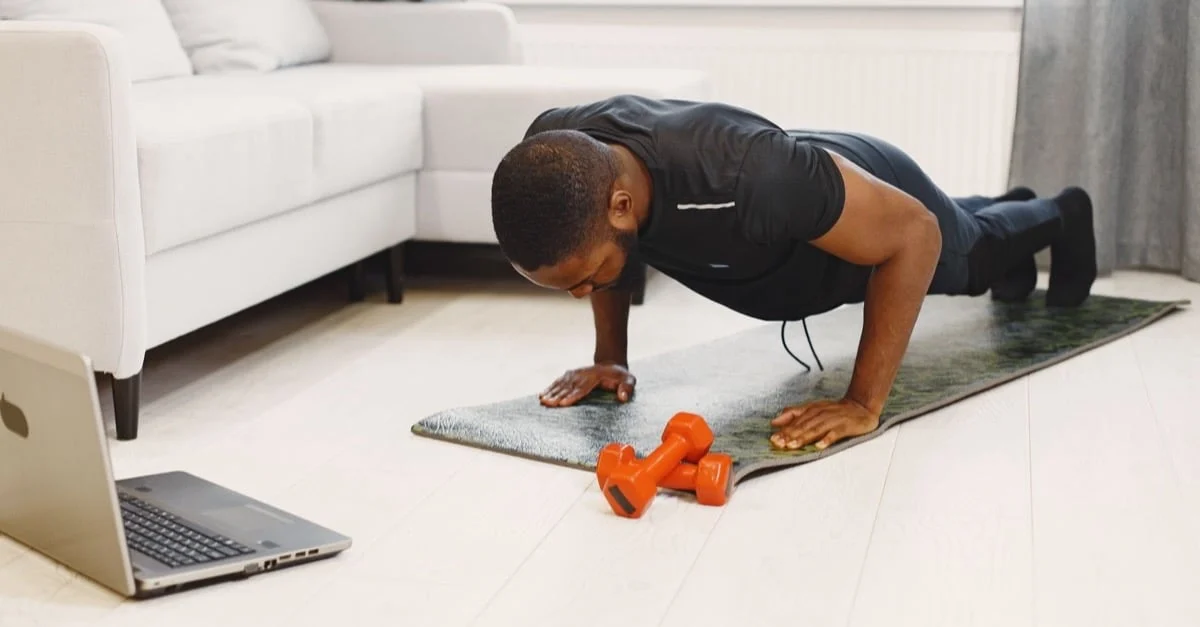
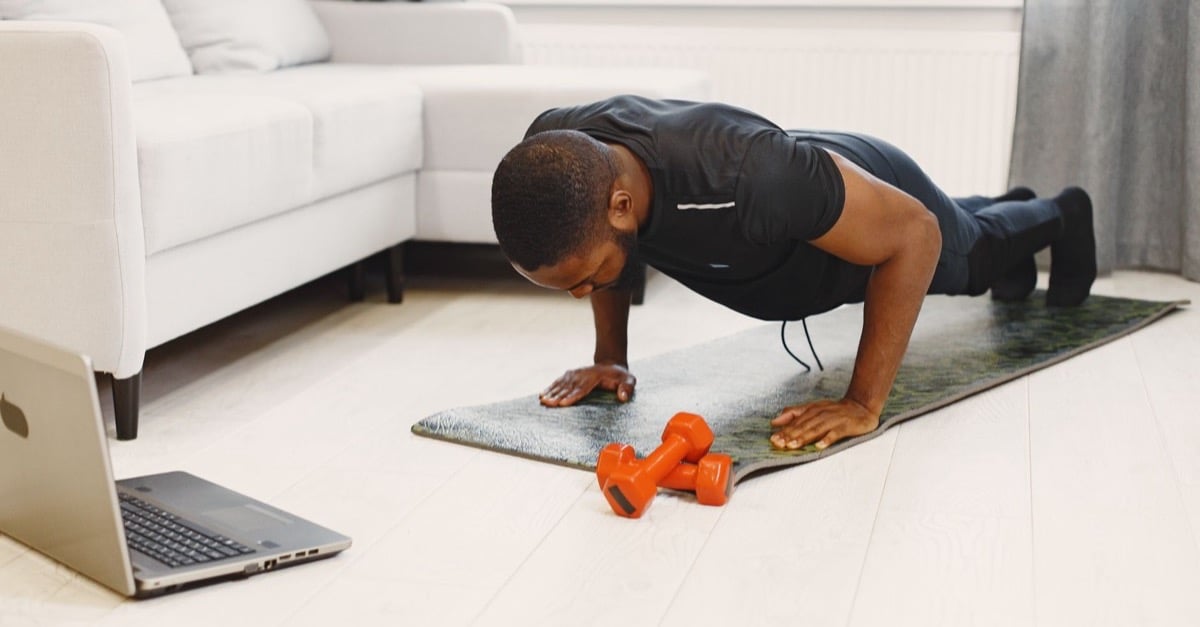
| Push-up | Hands on desk, chair, or floor | 3 sets of 8-12 | 1 set of 8-12 |
| Row | Towel on door handle or suitcase row | 3 sets of 10 | 1 set of 10 |
| Carry | Suitcase carry (corridor walk) | 3 sets of 30 steps/side | 1 set of 30 steps/side |
A Critical Safety Note: When using a door for towel rows, always select a door that latches and opens away from you. Pulling on the door should press it securely into the frame. If the door opens toward you, the handle is loose, or it is a sliding door, abandon the towel and perform "suitcase rows" instead.
The Science of Maintenance
The purpose of these sessions is maintenance—not peak performance. A review of maintenance training indicates that younger adults can preserve muscle size and strength for as long as 32 weeks on a single, high-intensity session per week. The variable to protect isn’t the volume (the number of sets); it is the intensity.
To maintain that intensity in a hotel room, you must manipulate the variables of the movement itself. If a push-up feels too easy, do not simply add more repetitions; change the angle. Elevate your feet on the bed frame, slow your descent to a three-count, or pause at the bottom of the movement. By turning every set into a challenge of mechanical difficulty rather than endurance, you satisfy the body’s need for stimulus without requiring a rack of heavy iron.
Chronology of a Successful Trip: A Realistic Case Study
Consider a typical four-night work trip. You have four mornings, but one will inevitably be lost to an early departure or a late-night arrival.
- Monday: Arrival at 11:00 PM. No exercise.
- Tuesday: Wake up early. Perform Session B (8 minutes). It is done before the first email is sent.
- Wednesday: A full morning. Perform Session A (20 minutes).
- Thursday: A heavy conference day. Perform Session B (8 minutes) before the day begins.
- Friday: A 5:40 AM airport run. No exercise.
This is a successful trip. You have trained three times, kept your body primed, and—most importantly—maintained the habit of showing up. You are not "behind" when you land at home; you are exactly where you left off.
Implications for Longevity
The ultimate goal of travel fitness is to remove the "on-off" switch from your life. When you treat exercise as something you only do under optimal conditions—at your home gym, in your familiar time zone—you are essentially training for failure.
The psychological impact of maintaining your routine is profound. By executing an 8-minute session on a Tuesday in a hotel room, you are proving to yourself that your fitness is not a luxury afforded only by leisure, but a non-negotiable part of your identity.
Furthermore, the data regarding sleep loss and physical performance supports this morning-centric approach. Acute sleep loss can decrease physical performance by over 7%, and evening tests consistently show lower output than morning sessions. Training first thing in the morning, before the day’s obligations and fatigue set in, is the best hedge against the volatility of travel.
How to Start Again
If you have already fallen off the wagon, do not let the guilt of a previous trip dictate your future. The "restart" is a mental construct. You do not need a "clean slate" to begin again; you only need to perform a single session. If you are struggling, return to the basics: a simple bodyweight circuit that requires zero equipment and zero setup.
Before your next departure, take three minutes to finalize your strategy:
- Draft your note: Store your Session A and Session B routines in the same digital note as your flight confirmation.
- Define your rungs: Know exactly what variation of the push-up or squat you are performing. Do not decide in the moment.
- Set the rule: Commit to Session B as the default for every morning you are away.
The shoes are optional. The equipment is in your luggage. The decision, however, must be made before you ever step through the airport security checkpoint. When you eliminate the room for debate, you eliminate the possibility of failure.