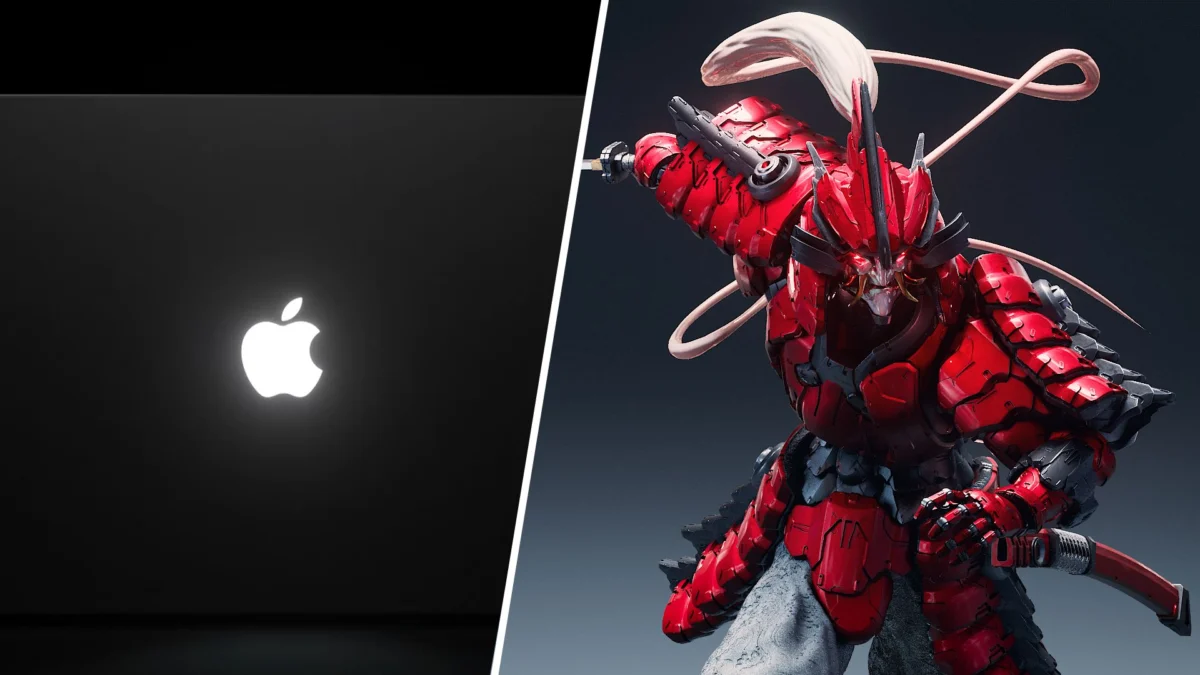
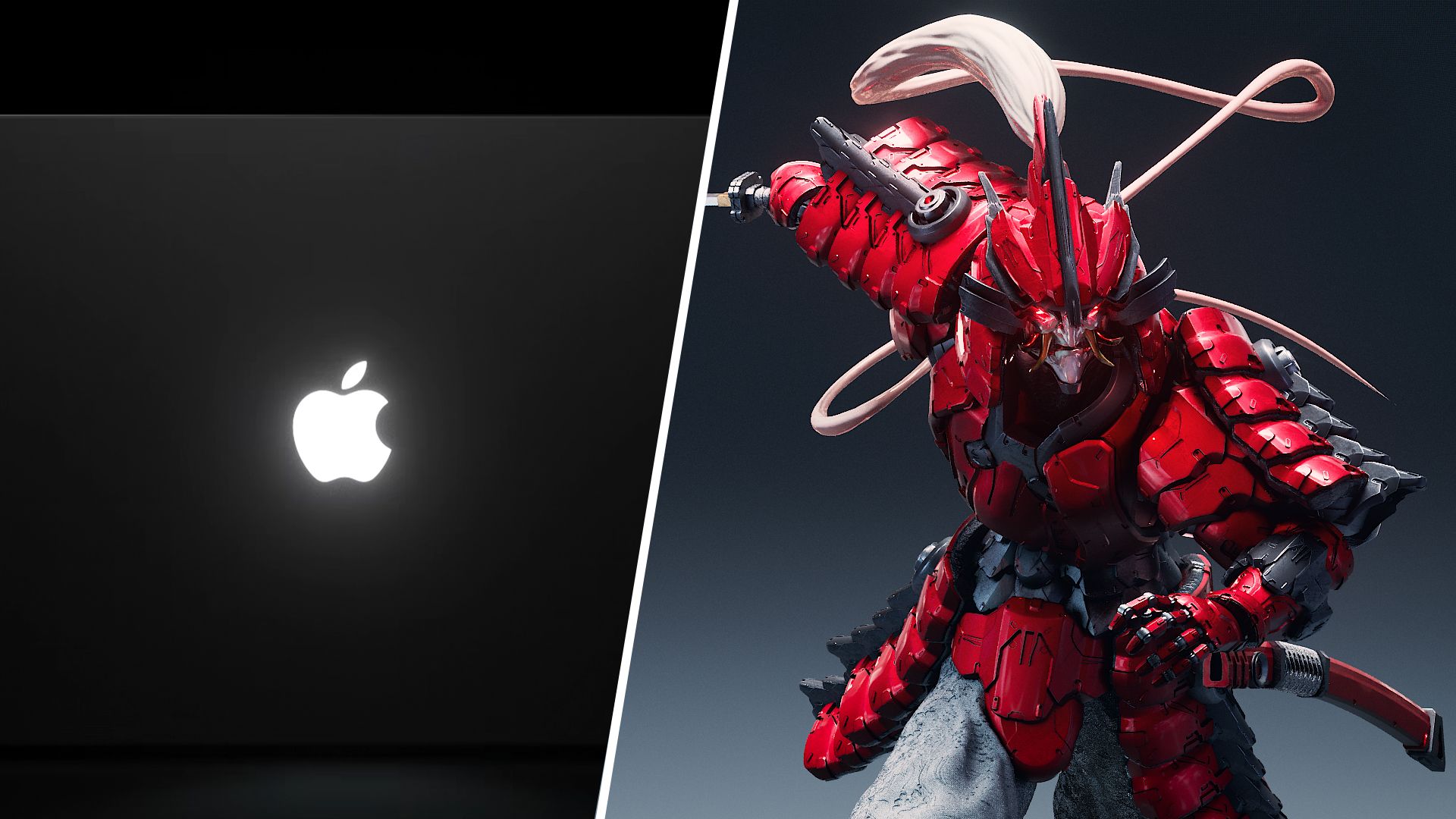
The landscape of professional creative work is undergoing a tectonic shift. With the launch of the new MacBook Pro featuring the groundbreaking PROLED XDR display, Apple has officially bridged the gap between traditional desktop computing and the tactile, immersive future of digital art. By introducing touch-input capabilities to the MacBook Pro line—a first in the history of Apple’s laptop computers—and pairing it with cutting-edge M5 Pro and M5 Max silicon, the company has provided a canvas that hardware developers are eager to exploit.
Leading this charge is Maxon, the powerhouse behind industry-standard tools like Cinema 4D and ZBrush. The company has announced that these flagship applications will receive native touch support for the new MacBook Pro by late November, alongside a revolutionary integration with the Apple Vision Pro. This synergy promises to turn the static act of 3D modeling into a fluid, multisensory experience.
The Hardware Revolution: A New Dimension for the MacBook Pro
At the heart of this transformation is the MacBook Pro PROLED XDR. While Windows laptops have utilized touchscreens for over a decade, Apple has historically resisted the implementation, citing concerns over ergonomics and OS optimization. However, the PROLED XDR display represents a departure from this philosophy. Boasting industry-leading brightness, contrast ratios, and color accuracy, this display is designed for the rigorous demands of color grading, visual effects, and architectural visualization.
The integration of the M5 Pro and M5 Max chips provides the computational overhead necessary to handle the latency-sensitive requirements of touch-based 3D sculpting and animation. By allowing artists to reach out and manipulate geometry directly on the screen, Apple is acknowledging that the "professional" workflow is no longer confined to the mouse and keyboard. The tactile feedback loop—the ability to physically touch an object you are sculpting—is expected to drastically reduce the learning curve for new artists while accelerating the iterations of seasoned veterans.
Chronology of the Integration
The rollout of these features is scheduled to unfold in a series of strategic phases, beginning with the hardware launch:
- November 6, 2026: The official launch and shipping date for the MacBook Pro with the PROLED XDR display.
- Late November 2026: Maxon will release the official updates for Cinema 4D and ZBrush, enabling native touch support on the new MacBook Pro.
- Late November 2026: The deployment of the Spatial Preview API, enabling seamless synchronization between the Mac and Apple Vision Pro running visionOS 27.
- End of 2026: Maxon is slated to release a dedicated Cinema 4D app for the iPad, further expanding the mobile-to-desktop ecosystem for 3D artists.
Bridging the Desktop and the Immersive: Spatial Preview
Perhaps the most ambitious aspect of this announcement is the new "Spatial Preview" capability. While touch support brings the artist closer to the screen, Spatial Preview removes the screen as a boundary altogether.
Through the use of the Spatial Preview API, artists using Mac Virtual Display on an Apple Vision Pro headset can now project their 3D scenes into a real-world environment. This is not merely a "viewing" mode; it is a collaborative workspace. An architect, for instance, can design a building in Cinema 4D on their MacBook Pro and, with a few clicks, step inside that building at a 1:1 scale using the Vision Pro.
This technology addresses a long-standing pain point in the industry: the difficulty of judging scale, proportion, and spatial presence through a 2D monitor. By inhabiting the digital environment, designers can identify layout flaws, lighting issues, and ergonomic problems that would be invisible in a standard viewport.
Supporting Data and Technical Implications
The move toward touch and spatial computing is supported by a growing trend in the creative industry toward "Hybrid Production." According to industry surveys, over 65% of 3D artists now utilize multiple devices throughout their creative pipeline, often starting with a tablet or mobile device before moving to a workstation for high-fidelity rendering.
The M5 architecture plays a critical role here. With significantly improved unified memory bandwidth and dedicated Neural Engine performance, these chips are capable of real-time ray tracing while simultaneously processing touch input coordinates. This ensures that when an artist brushes a surface in ZBrush, the response is instantaneous, maintaining the "flow state" essential to digital sculpting.
Furthermore, the integration with visionOS 27 ensures that the data transfer between the Mac and the Vision Pro is low-latency, a requirement for preventing motion sickness and maintaining the "presence" necessary for professional review sessions.
Official Perspectives: The Vision for the Future
Maxon’s leadership has framed this update as an "entirely new dimension to professional creative workflows." By extending the responsiveness of ZBrush for iPad—which has already been lauded for its intuitive, pen-and-touch-based approach to digital clay—to the desktop, Maxon is essentially consolidating their user experience.
"We are moving away from the era of ‘looking at’ our work to ‘working within’ our work," a spokesperson for the development team noted. The goal is to make the software feel like an extension of the artist’s own hands.
For reviewers and stakeholders, this technology is a game-changer. Often, clients struggle to conceptualize a 3D model when it is presented on a flat screen. With the Vision Pro integration, a client can now stand in the middle of a proposed interior design, walk around the furniture, and look up at the ceiling treatments. This level of transparency in the design process is expected to lead to fewer revisions and higher client satisfaction rates.
The Broader Implications for Creative Industries
The implications of these developments extend far beyond 3D modeling and animation. We are witnessing the maturation of "Spatial Design" as a legitimate discipline.
1. Architectural Visualization (ArchViz)
Architects and urban planners will likely be the first to adopt these workflows at scale. The ability to iterate on a floor plan in Cinema 4D and immediately walk a client through the space at full scale provides a competitive advantage that traditional renderings cannot match.
2. Retail and Experiential Design
Brands looking to create immersive pop-up stores or exhibition spaces can now test sightlines, traffic flow, and branding placement in a virtual environment. This reduces the costs associated with physical prototypes and enables global teams to review the same virtual space simultaneously.
3. Entertainment and Game Development
Level designers can now perform "spatial passes" on their environments, ensuring that the scale of a game world feels "right" to the player. By moving through a level in a 3D space, developers can spot potential collision issues or texture stretching that would be difficult to catch on a 2D display.
Conclusion: A Turning Point for Professionals
The introduction of touch input to the MacBook Pro, combined with Maxon’s robust software updates and the spatial capabilities of the Apple Vision Pro, marks the end of an era where creative software was tethered to the mouse. As we head into 2027, the creative pipeline is becoming more tactile, more immersive, and more collaborative.
For professionals who have spent years mastering the keyboard shortcuts and trackpad gestures of the traditional era, this shift may seem daunting. However, the benefits of spatial and tactile interaction are too profound to ignore. As these tools become standard, the definition of a "creative professional" will evolve to include not just those who can master a tool, but those who can manipulate their digital creations as naturally as if they were made of physical matter.
As we await the late November updates, the industry is poised to move from the flat screen into the world of spatial reality—a transition that promises to be as significant as the shift from hand-drawn drafting to CAD.