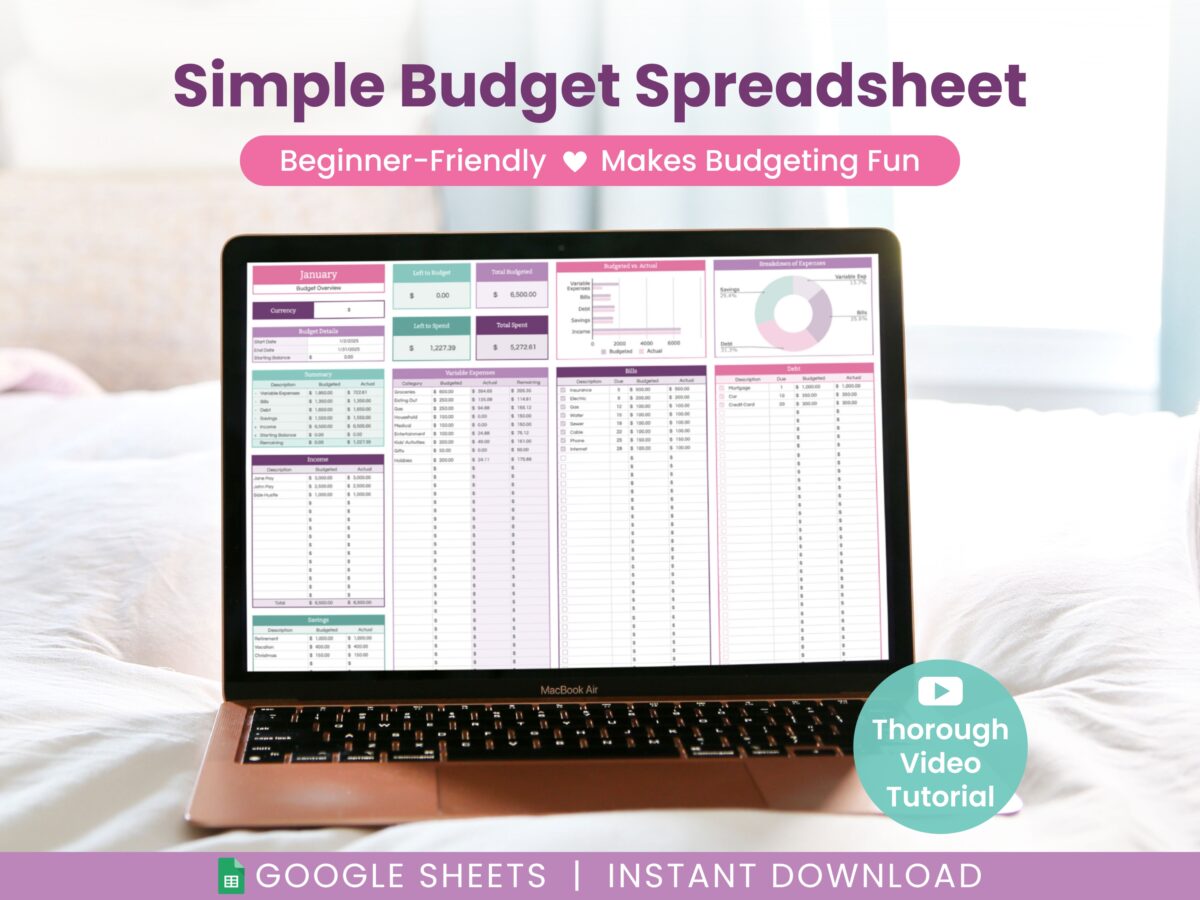
In an era of rising living costs, economic uncertainty, and digital spending that makes transactions feel invisible, taking control of personal finances has never been more critical. For many, the mere mention of the word "budget" evokes feelings of restriction, anxiety, and administrative exhaustion. However, modern financial experts and personal organization advocates argue that a well-crafted monthly budget is not a cage—it is a roadmap. By translating abstract income and expenses into clear, intentional categories, households can eliminate financial panic, accelerate debt repayment, and build sustainable long-term wealth.
This comprehensive guide breaks down the mechanics of designing a monthly budget from scratch, utilizing practical frameworks, historical bank data, and structured tracking routines to turn financial management from a chore into an empowering habit.
Main Facts: The Core Pillars of a Sustainable Budget
At its foundational level, a monthly budget is a quantitative reconciliation between incoming revenue and outgoing liabilities. According to financial strategists, successful budgeting relies on shifting the mindset from passive spending to proactive allocation.
The core mechanics rest on a seven-step framework designed for absolute beginners:
Net Income Calculation: Determining exact take-home pay, factoring in taxes, deductions, and secondary income streams.
Savings Milestones: Incorporating future-proofing funds and sinking funds.
Consistent Tracking Rituals: Logging transactions regularly to maintain accountability.
Iterative Refinement: Adjusting unrealistic thresholds based on historical data.
Unlike rigid historical models that demanded manual ledger calculations, modern budgeting utilizes dynamic digital spreadsheets and printable budget binders that automate complex math, lowering the barrier to entry for millions of households.
Chronology: The Step-by-Step Implementation Roadmap
Building a budget does not happen overnight. It requires a methodical, historical review of your financial habits followed by forward-looking planning. Here is how to construct your budget chronologically:
Step 1: Figure Out Your Net Income
The starting point of any financial plan is understanding your true purchasing power. This is not your gross salary, but your net monthly income—the money that actually hits your bank account after federal taxes, state taxes, health insurance premiums, and retirement contributions are deducted.
Couples and Partners: Combine net income figures from all earners in the household.
Side Hustles: Factor in secondary revenue streams, but keep them realistic.
Variable Income: For those working on commission or freelance contracts, adopt a conservative baseline estimate for the first few months. It is significantly easier to scale up a budget when you earn more than it is to scramble when you overestimate your baseline.
Step 2: Record Recurring Bills
Once your revenue is established, catalog your recurring bills. These are fixed or semi-fixed payments that occur regularly (monthly, quarterly, or annually) and remain relatively stable. Examples include rent or mortgage payments, utilities, internet services, insurance premiums, and subscription services. If you cannot remember every bill, pull up the last three months of bank and credit card statements to catch forgotten recurring charges.
Step 3: Create Categories for Variable Expenses
Variable expenses fluctuate based on lifestyle, season, and choices. This includes groceries, dining out, gasoline, clothing, and personal care.
You can customize these categories to be as granular or as broad as you prefer. Some individuals thrive using the popular 50/30/20 rule (allocating 50% of income to needs, 30% to wants, and 20% to savings). Others prefer a middle-ground approach: tracking multiple distinct categories without getting bogged down by micro-management.
Step 4: Plan Out Debt Payments
Debt can quietly drain a household’s financial health through compounding interest. While minimum debt payments often fall under recurring bills, intentional debt reduction requires its own strategic allocation. Whether employing the Debt Snowball Method (paying off the smallest balances first for psychological wins) or the Debt Avalanche Method (targeting highest-interest rates first), a budget must carve out dedicated funds above the minimums to accelerate debt elimination.
Step 5: Establish Savings Goals
A complete financial plan looks beyond the current month. Future expenses—ranging from holiday gifts and annual vehicle maintenance to emergency funds and vacations—inevitably arrive. By establishing savings categories or sinking funds and funding them incrementally each month, households can absorb financial shocks without resorting to high-interest credit cards.
Step 6: Start Tracking Your Spending
This is where the transformation occurs. Logging transactions as they happen creates absolute transparency. Tracking reveals billing errors, duplicate charges, and overlooked subscriptions. More importantly, the psychological awareness that a purchase will be logged fosters intentional consumer behavior, naturally curbing impulse buying.
Step 7: Tweak Your Budget as Needed
A budget is a living document, not a concrete monument. After tracking your spending for 60 to 90 days, analyze the discrepancies. If a category is consistently over-budget, adjust the limit to reflect realistic lifestyle costs rather than punishing yourself. Conversely, unspent surpluses can be redirected toward savings or debt principal.
Supporting Data and Methodologies
Financial literacy experts emphasize that tools matter as much as methodology. Whether utilizing automated spreadsheet software—which handles computational totals, conditional formatting, and visual charts—or traditional pen-and-paper binders, consistency is the ultimate predictor of success.
The Data on Habit Formation: Studies in behavioral economics consistently show that tracking daily behaviors increases self-regulation. Individuals who review their finances weekly reduce discretionary spending by an average of 10% to 15% within the first quarter of implementation.
Flexibility vs. Rigidity: According to consumer finance guidelines, households that build buffer categories (such as "miscellaneous" or "pocket money") exhibit higher long-term budget retention rates than those attempting absolute zero-variance budgeting.
Official Responses and Expert Perspectives
While financial advisors, certified public accountants (CPAs), and productivity experts differ on specific allocation rules, they share a unified consensus on the philosophy of money management.
"This spreadsheet has everything I wanted plus stuff I didn’t even realize I needed! It’s exactly what I had been trying to do on my own but didn’t know how to do. It’s helped me stick to my goal of weekly budget tracking and makes it so easy!"
— Juanita G., Verified Budget Spreadsheet User
Financial psychologists frequently note that the primary barrier to budgeting is emotional, not mathematical. The anxiety associated with looking at bank statements often causes avoidance behavior. Experts advocate for reframing budgeting as a self-care ritual—a weekly check-in that grants permission to spend deliberately on things that bring genuine value, while pruning financial waste.
Implications: The Psychological and Financial Aftermath of Budgeting
Implementing a disciplined monthly budget yields ripple effects across every domain of personal and family life.
Financial Resilience
When macroeconomic indicators point toward inflation, rising interest rates, or labor market shifts, budgeted households are insulated. Knowing exact cash flow allows families to pivot quickly during emergencies—such as medical crises or unexpected home repairs—without facing catastrophic debt spirals.
Psychological Freedom
Paradoxically, putting restrictions on money creates psychological liberation. Rather than experiencing the nagging guilt of wondering “Can I afford this?”, a budget provides an immediate, binary answer. If funds are allocated, the purchase is guilt-free. If not, it requires deliberate re-allocation. This clarity eliminates decision fatigue and financial friction within partnerships, transforming money from a taboo source of marital stress into a collaborative team project.
Long-Term Generational Impact
By mastering cash flow tracking, individuals model healthy financial literacy for the next generation. Children raised in homes where money is discussed openly and managed intentionally develop stronger savings behaviors, lower debt-to-income ratios, and greater career flexibility as adults.
Final Thoughts: Perfection is Not the Goal
The journey toward financial wellness is a marathon, not a sprint. Your budget will not work out perfectly in month one, and unexpected expenses will inevitably disrupt your projections. That is entirely normal.
Budgeting is designed to build awareness, foster intentionality, and provide a clear view of your financial ecosystem. It is an instrument of empowerment, not an instrument of punishment. By starting small, remaining consistent with your tracking schedule, and granting yourself the grace to adjust your numbers over time, you can permanently transform your financial future.