LEIPZIG, GERMANY — Across the globe, ecosystems face a silent, creeping crisis. While headline-grabbing environmental disasters often focus on deforestation, industrial pollution, or extreme weather events, a quieter threat is steadily dismantling native biodiversity from the ground up: invasive alien species.
Among the most insidious of these ecological disruptors are invasive plants. Capable of choking out native flora, altering soil chemistry, destroying habitats for local fauna, and evading traditional management methods, these non-native invaders have become one of the primary drivers of global biodiversity loss.
For decades, ecologists and conservationists have fought an uphill battle against these botanical outlaws. Traditional methods of mapping and removing invasive vegetation are frequently prohibitively expensive, labor-intensive, and agonizingly slow. Furthermore, a glaring lack of effective early-detection tools has historically crippled researchers’ abilities to halt colonization before these plants establish permanent, destructive footholds.
However, a groundbreaking initiative in Germany is turning the tide, proving that the solution to this high
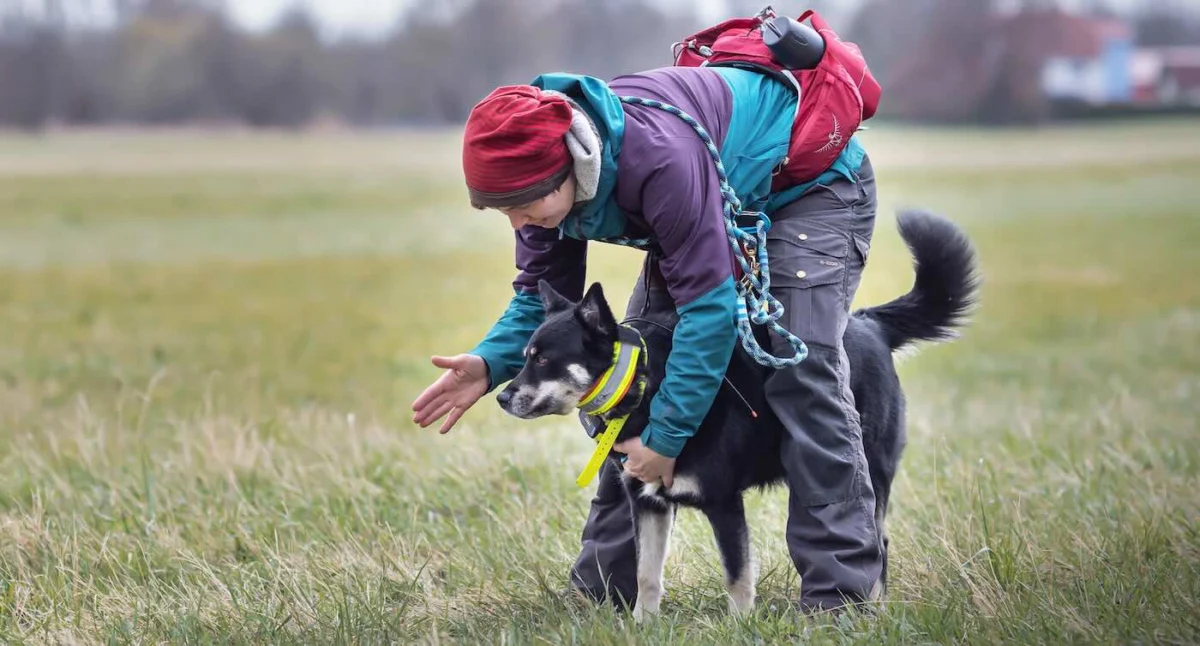
-tech ecological problem might just be walking right beside us. Researchers at the Helmholtz Centre for Environmental Research (UFZ) in Leipzig have successfully evaluated a novel, community-driven approach to environmental conservation: training everyday dog owners and their canine companions to act as frontline biological detectives.
By marrying the astonishing olfactory prowess of dogs with the passion of citizen scientists, this innovative program is transforming routine daily walks into a powerful tool for environmental defense.
The Main Facts: Canines as Conservationists
The core of the Leipzig study evaluates a simple yet revolutionary premise: Can volunteer handlers and pet dogs be trained to reliably detect invasive, destructive plant species in the wild?
The short answer is a resounding yes. According to a feasibility study recently published in the prestigious journal PLOS One, trained volunteer dog-handler teams successfully located invasive plants in real-world field conditions with an impressive 75% accuracy rate.
Dr. Annegret Grimm-Seyfarth, lead researcher at the UFZ, spearheaded the project to test whether citizen scientists could be effectively integrated into the formal fight against ecological degradation. Between 2021 and 2023, the research team recruited and trained 31 dogs alongside their human owners. The curriculum focused on three of Europe’s most problematic, highly aggressive invasive plant groups:
- Himalayan balsam (Impatiens glandulifera)
- Common ragweed (Ambrosia artemisiifolia)
- Knotweed family species, most notably Japanese knotweed (Fallopia spp. complex)
These species are notorious for their rapid growth, resilience, and capacity to cause widespread environmental and structural damage. Japanese knotweed, for instance, possesses roots so strong they can fracture concrete and asphalt, while common ragweed produces pollen that triggers severe allergic reactions in humans.
When the training culminated in a rigorous practical field test, 12 teams successfully completed the examination, with 11 of them passing with flying colors. The resulting data proved that ordinary pets, when given specialized scent training and expert guidance, can perform complex ecological surveys with professional-grade precision.
Chronology of the Project: From Concept to Conservation
The journey toward establishing this citizen-science sniffing network unfolded systematically over a multi-year period, requiring careful planning, rigorous training phases, and comprehensive post-evaluation analysis.
2021: Program Inception and Recruitment
Recognizing that professional conservation agencies lack the personnel and funding to manually survey every square kilometer of vulnerable landscape, Dr. Grimm-Seyfarth and her UFZ colleagues conceptualized a volunteer-based model. They reached out to dog owners across Germany, seeking participants willing to dedicate their time and pets to scientific research. Out of numerous applicants, 31 diverse dog-handler pairs were selected for the inaugural cohort.
2021–2023: The Training Phase
Over a span of two years, the selected dogs and their owners underwent specialized obedience and scent-detection training. Rather than focusing on drugs, explosives, or missing persons, these animals were conditioned to recognize the specific chemical signatures of Himalayan balsam, common ragweed, and Japanese knotweed. Handlers were simultaneously educated on field safety, systematic search patterns, data collection, and plant ecology.
2023: The Field Test
The multi-year project culminated in a high-stakes practical evaluation. Twelve volunteer teams were deployed into unknown wild environments to locate hidden patches of the target invasive species. Eleven of the twelve teams successfully passed the examination, establishing an average detection success rate of 75%.
Post-Study Analysis and Publication
Following the successful field tests, the UFZ research team compiled their findings into a comprehensive study. Published in PLOS One, the paper outlined not only the success of the dogs, but also a definitive set of recommendations for scaling up future projects. These guidelines focus on improving volunteer selection protocols, enhancing coordination networks, refining dog training techniques, and optimizing initial deployment strategies.
Supporting Data and Methodology
The success of the UFZ project relies heavily on the biological reality of canine olfaction. A dog’s sense of smell is estimated to be anywhere from 10,000 to 100,000 times more acute than that of a human. While human surveyors can easily miss tiny, emerging shoots hidden beneath tall grass or leaf litter, a trained dog can detect microscopic volatile organic compounds emitted by specific plant tissues even when the plant is completely out of sight.
Despite these natural advantages, the research data underscores that canine intuition alone is not enough. The study highlighted several critical variables required for operational success:
- Expert Guidance: Consistent oversight from both professional dog trainers and ecological experts is vital. Without ongoing feedback, both dogs and handlers can develop bad habits that degrade search accuracy.
- Volunteer Motivation: The attrition rate in citizen-science projects can be high, but the UFZ team noted exceptionally high enthusiasm levels among participants, driven largely by the human-canine bond and a shared love for the outdoors.
- Standardized Deployment: The 75% accuracy rate achieved by the passing teams demonstrates that structured testing environments are necessary to weed out underperforming pairs before deploying them into sensitive conservation zones.
Official Responses and Expert Perspectives
The academic and conservation communities have responded with immense enthusiasm to the publication of the UFZ study. The integration of citizen science into hard-science methodologies represents a paradigm shift in how environmental monitoring can be funded and executed.
"Our study shows that trained volunteer dog-handler teams have real potential to support the early detection of invasive plants," Dr. Grimm-Seyfarth stated in an official media release. She emphasized the psychological and social win-win of the project: "What we find particularly exciting is the opportunity to turn something people already love doing—spending time outdoors with their dogs—into a meaningful contribution to biodiversity conservation."
Dr. Grimm-Seyfarth also highlighted the scalable nature of the concept. "By combining dogs’ remarkable sense of smell with the enthusiasm of citizen scientists, we could expand monitoring efforts exponentially. With the right training, everyday walks could become an additional resource for detecting invasive plants early."
Reflecting on the participants themselves, Dr. Grimm-Seyfarth expressed profound optimism: "It was great to see how much motivation many of the participants brought to the program. Their dedication proves that communities are more than willing to step up when given the right tools and guidance."
Broader Implications: A Global Trend in Canine Conservation
While the Leipzig project focuses heavily on flora, the use of sniffer dogs to combat invasive species is part of a rapidly growing global movement that spans multiple continents and ecosystems. Conservationists are increasingly turning to the animal kingdom to solve environmental crises caused by imported pests.
Fighting the Spotted Lanternfly in North America
A striking parallel to the German plant-detection project is unfolding in the United States, where researchers at Virginia Tech have deployed sniffer dogs to combat the devastating spread of the spotted lanternfly (Lycorma delicatula).
Native to Asia, this vibrant yet destructive planthopper has been steadily marching across the American East Coast, feeding on vital agricultural crops, orchards, and hardwood trees without encountering natural predators. Traditional pesticide applications have proven expensive and environmentally risky.
In response, Virginia Tech scientists trained specialized canine teams to sniff out the insect’s hidden egg masses—often laid on rough tree bark, rocks, and outdoor furniture—in the wild. These tiny egg masses are notoriously difficult for human inspectors to spot. The canine teams, however, have successfully located and eliminated an astounding 10,000 egg masses, dramatically slowing the insect’s geographic expansion and saving countless trees from destruction.
Turning Everyday Walks into Ecological Surveillance
The implications of these combined successes are profound. If dog owners across Europe and North America can be systematically trained to spot invasive plants during morning strolls, and if specialized canines can hunt down invasive insect pests in commercial forests, the paradigm of environmental monitoring changes entirely.
Instead of relying solely on sparse governmental agencies, underfunded university departments, or sporadic satellite imagery, conservationists could deploy a decentralized, self-funding army of millions of dog owners. Every park visit, neighborhood walk, and weekend hike transforms into a localized ecological survey.
Looking Ahead
As the Helmholtz Centre for Environmental Research refines its recommendations for future volunteer programs, the roadmap is clear. By lowering the barriers to entry for citizen scientists, establishing rigorous training standards, and leveraging the unparalleled olfactory power of our canine companions, humanity gains a vital new weapon in the defense of global biodiversity.
The message to gardeners, pet owners, and nature lovers is clear: the fight against invasive species doesn’t just belong to scientists in laboratories—it starts at the end of a leash.